
This is an archive of articles written by Anita Westervelt between 2015 and 2021 for the Rio Grande Valley Chapter, Texas Master Naturalist. To focus on the most current information, these earlier articles were retired from the original site. We are pleased to provide a permanent home for them here. Please note that the articles are preserved mainly in their original form and may contain outdated information or links. For Anita’s current work, please visit the South Texas Border Chapter’s blog: stbctmn.org/blog.
-

Visiting raptors highlight Valley winter skies
Story and photos by Anita Westervelt, Texas Master Naturalist Large kettles of vultures are a common sight in a Valley winter sky — black migrating vultures joining with our resident turkey vultures — a dozen or more in a kettle, circling up, up and away. Chances are they are searching for food although it could…
-

Anita’s Blog — Gifts
Many people think cats are aloof at best and downright arrogant, calculated and self-centered at worst. Our two cats are loving and generous; my husband labels them as needy and killers. Their generosity is apparent in their frequent gifts: lizards, rabbits, squirrels, snakes, rats, mice, shrews and the occasional bird. We’ve been somewhat successful teaching…
-

Anita’s Blog — Cause and Effect
Texas Master Naturalist and Rio Grande Valley Chapter co-founder Frank Wiseman and I share both an interest in native plants and a love of words. Exceptionally fun are words naming phobias. Frank recently called my attention to the word, nomophobia that began life as an acronym for NO MObile Phone PhoBIA. In reality, the term…
-

Look quick — Tiny birds that come for the winter
Story and photos by Anita Westervelt, Texas Master Naturalist Lucky is the yard that attracts winter-visiting feathered friends. It’s not hard to do: native honey mesquite, Texas Ebony, Mexican ash and live oak are popular insect-attracting trees which in turn beckon birds that are permanent residents, winter residents and those just passing through. A tiny,…
-

Annoying but valuable garden mates
Story and photos by Anita Westervelt, Texas Master Naturalist There’s nothing quite as mystical as a crisp, heavy-dewed morning at first light. Fences, shrubs, trees and anything that didn’t move during the night are shrouded in artfully constructed spider webs that glint and dazzle in the sun. Spiders are not insects. They are called arachnids…
-

Anita’s Blog — Great Fishermen of the Resaca
Fifteen cormorants, for about as many years, have hung around some old posts on the other side of the resaca. Another post is in the middle of the resaca a little way from those posts. The single post is directly in line with the window above our kitchen sink. Different birds take turns using it…
-

Build a Community Garden Together — Masks On
Story and photos by Anita Westervelt, Texas Master Naturalist Individuals and community groups have found joy in creating butterfly gardens this year. Not a new concept, but tranquility-producing projects during chaotic times and excitement in discovering nature and wildlife have been a panacea for stress, loneliness, boredom and anxiety. A butterfly garden isn’t just for…
-
Anita’s Blog – Valuable Garden Mates
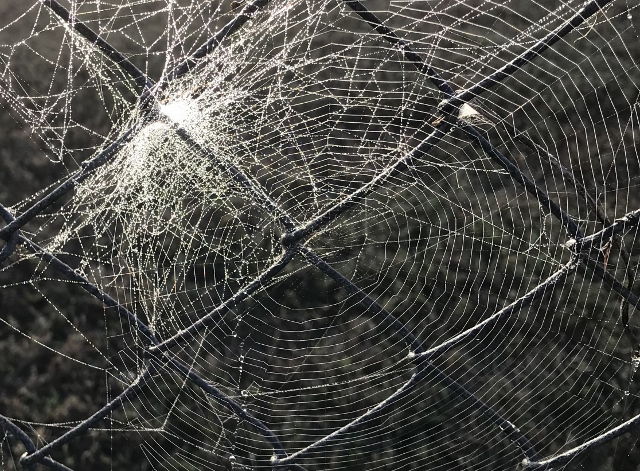
There’s nothing quite so mystical as a crisp, heavy-dewed, humid, 73-degree morning at first light. The fences, shrubs, trees and anything that didn’t move during the night are shrouded in artfully constructed spider webs that glint and dazzle in the rays of the rising sun. Conversely, there’s nothing so annoying as walking face first into…
-
Lichens — colorful, unique, complex and beautiful
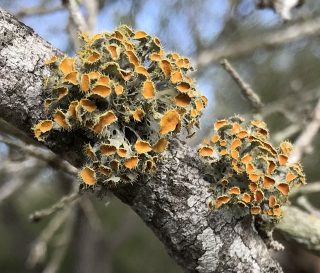
Story and photos by Anita Westervelt, Texas Master Naturalist Lichens are unique organisms that have been around for about 400 million years. They are not plants, nor mosses. Lichens, defined biologically, are a complex life form that is a symbiotic (mutually beneficial) partnership of two separate organisms: a fungus and an alga. Lichens do not…