
This is an archive of articles written by Anita Westervelt between 2015 and 2021 for the Rio Grande Valley Chapter, Texas Master Naturalist. To focus on the most current information, these earlier articles were retired from the original site. We are pleased to provide a permanent home for them here. Please note that the articles are preserved mainly in their original form and may contain outdated information or links. For Anita’s current work, please visit the South Texas Border Chapter’s blog: stbctmn.org/blog.
-
Anita’s Blog — There’s Always Something
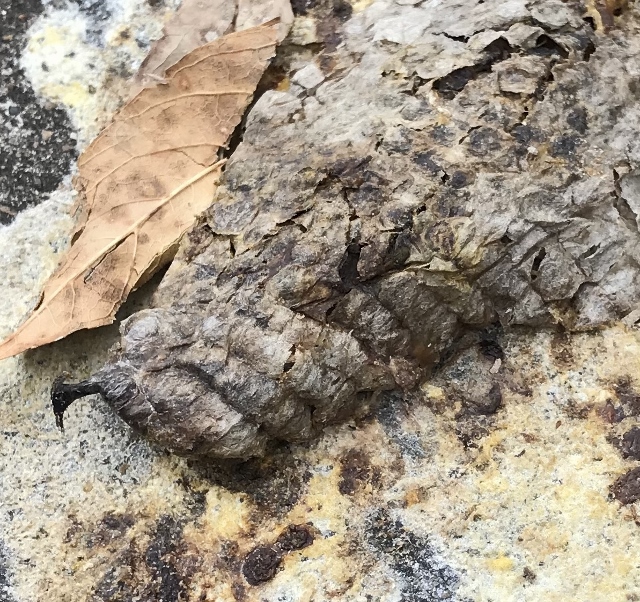
Discovering a pile of scat is like being visited by something in secret, and just to prove it came and went unnoticed, it leaves a trace of itself for you to find. I found a most unusual splotch on the driveway one morning that didn’t relate to anything I recalled ever having seen. It was…
-

A day in the life of a Texas insect
Story and photos by Anita Westervelt Ever wonder what it’s like to be an insect? Let’s begin at the break of dawn, that diaphanous time when the earth is pitch black with but a hint of translucent pink on the horizon. Just before this magical time, butterflies, moths, cicadas and other winged creatures begin breaking…
-

Yellow blooms for the Butterfly Garden
Story and photos by Anita Westervelt, Texas Master Naturalist A yellow garden is full of sunshine — and butterflies, bees and hummingbirds! An important aspect of a butterfly garden is to have something blooming year-round so butterflies visit longer. Color variety is important, too, but let’s hear it for the yellows. Four native, nectar-rich, butterfly-attracting…
-
Anita’s Blog — The Dark of Night
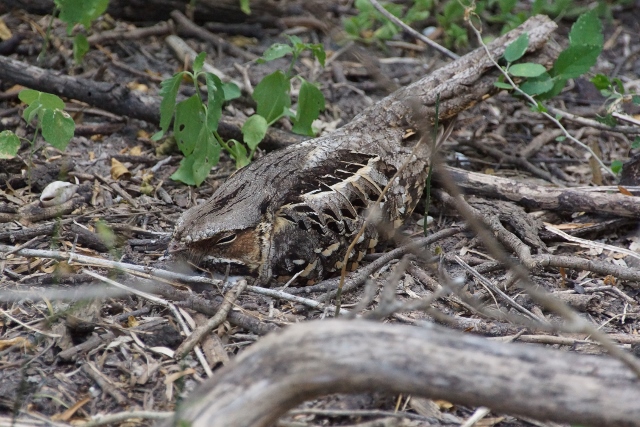
Everyone knows the night time is scary. Any matter of danger lurks, undetected, in the dark. A couple of years ago, a soft wheeeel gained in decibels near where I was enjoying the summer night; the screeched word slowly growing to a piercing squeal before settling into a puc, puc, p’weeEER. Frightening, it was, leaving…
-
Anita’s Blog — Guilt-free Gardening
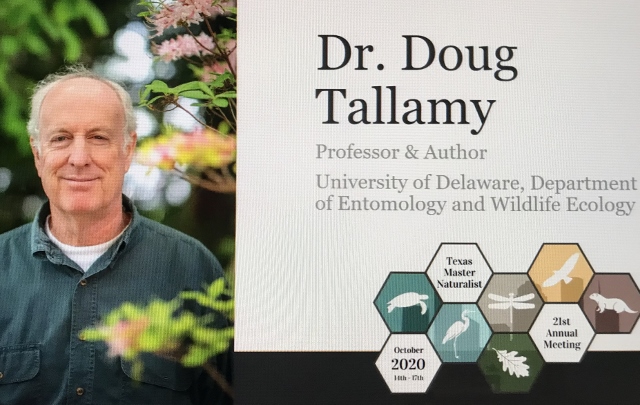
This past week saw 1,165 Texas Master Naturalists from all 48 chapters across Texas attending the annual conference — virtually. One particular technical session resonated with me because it allowed me to finally be a guilt-free gardener! Yes, I have a guilty secret. I harbor some non-native plants in my gardens. And that’s ok! Doug…
-
A night visitor to keep around
Story and photos by Anita Westervelt, Texas Master Naturalist The Virginia opossum (Didelphis virginiana) is a critter of the night more beneficial to a garden and the urban scene than it is a menace or threat — and they’re just almost cute. Opossums are relatively small — about the size of a cat — ranging…
-
A Rabble of Butterflies
— Bring in the butterflies with just a couple of plants Story and photos by Anita Westervelt, Texas Master Naturalist September’s rains provided a tremendous boost to our fall kaleidoscope of butterflies. What’s rain got to do with it? September rains create a burst of blooms in our native plant communities — in time for…
-
Fall caterpillars are on the move
Story and photos by Anita Westervelt, Texas Master Naturalist Some moths and butterflies are still laying eggs, and in six to 10 days, those eggs will hatch and tiny caterpillars will be on the move. Moth and butterfly caterpillars grow through about five instar stages. After the final stage, moth caterpillars form a cocoon while…
-
Anita’s Blog — Changes are Afoot
The temperature is a-changing; we’re promised a drop soon in the humidity levels. The birds in the trees are more diverse — different species passing through with the annual migration. There are more hummingbirds darting around tubular-shaped blooms in the garden, far less dragonflies in the air and more species of butterflies than you can…